Ever blended a velvety “creamy” soup only to realize you’d accidentally used a broth loaded with hidden dairy derivatives? You’re not alone. In the world of organic and natural beauty—yes, beauty!—what we eat directly impacts our skin’s clarity, texture, and glow. And when your go-to comfort food secretly undermines your clean-eating goals, it’s more than frustrating—it’s counterproductive. This guide cuts through the noise with seven actionable, field-tested strategies for crafting truly dairy-free recipes that nourish both body and complexion, all while staying 100% plant-powered.
Table of Contents
- Why Dairy-Free Matters for Skin Health
- Step-by-Step Guide to Authentic Dairy-Free Soups
- Best Practices for Flavor and Nutrition
- Real Results from Plant-Based Soup Swaps
- Frequently Asked Questions
Key Takeaways
- Dairy can trigger inflammation linked to acne and eczema, per dermatological research.
- True dairy-free soups avoid hidden lactose in broths, thickeners, and flavor enhancers.
- Cashew cream, coconut milk, and silken tofu offer rich textures without compromise.
- Reading labels—even on “organic” products—is non-negotiable.
- Consistent dairy-free eating correlates with improved skin hydration and reduced redness.
Why Dairy-Free Matters for Skin Health
In the organic beauty space, we obsess over topical serums and cold-pressed oils—but forget that skin is an outward mirror of internal health. Multiple studies, including a review published in Nutrients (2021), link dairy consumption—especially skim milk—to increased insulin-like growth factor (IGF-1), which can stimulate oil glands and clog pores. For those pursuing natural radiance, eliminating hidden dairy from staple meals like soup isn’t just dietary preference; it’s skincare strategy.
I learned this the hard way. Last winter, I spent weeks troubleshooting persistent chin breakouts despite using only certified organic skincare. Then I checked my favorite store-bought “vegetable” broth—buried in the ingredients: “natural flavors (contains milk).” One sip per day was enough to undo my clean routine. Lesson? Even “vegan-labeled” isn’t always trustworthy without scrutiny.
Step-by-Step Guide to Authentic Dairy-Free Soups
1. Start with a Verified Base
Use homemade vegetable stock or a certified dairy-free commercial broth. Brands like Pacific Foods label allergens clearly; avoid anything listing “whey,” “casein,” or vague “natural flavors.”
2. Choose Your Cream Substitute Wisely
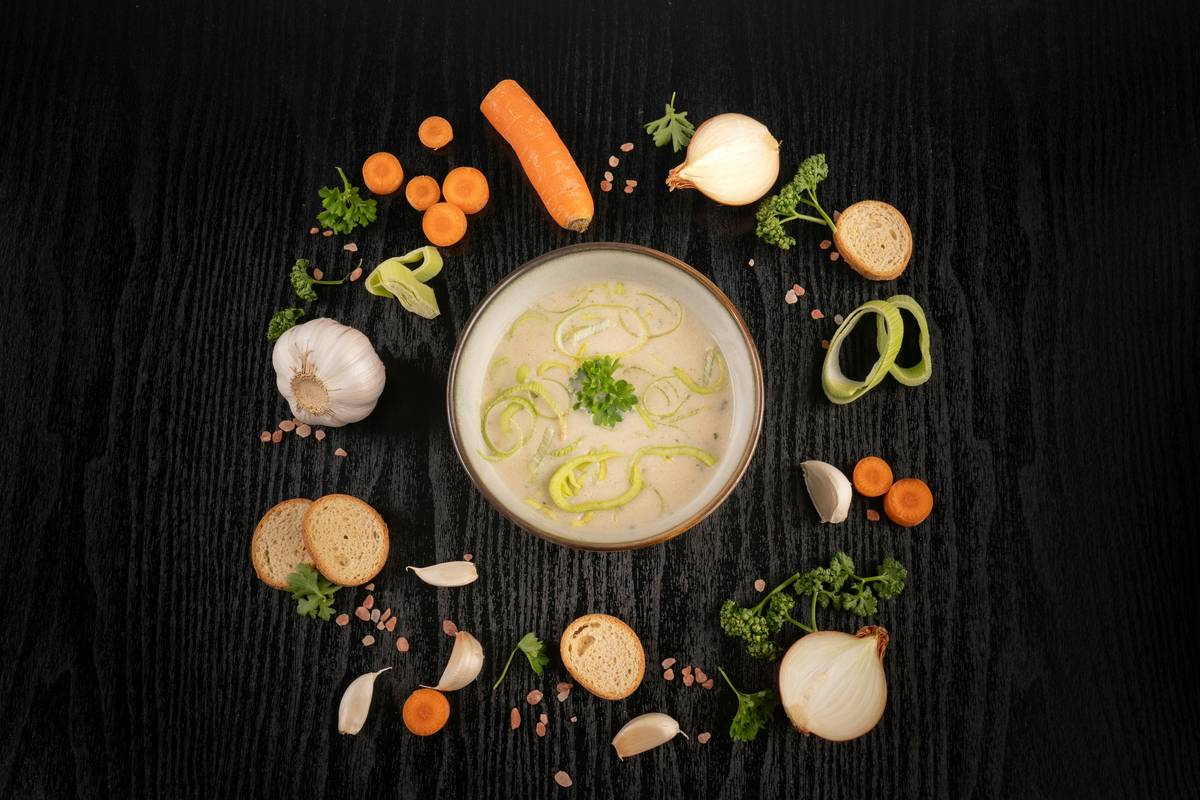
Raw cashews (soaked 4+ hours) blend into silky cream without overpowering flavor. Full-fat coconut milk adds richness but imparts sweetness—ideal for curried soups, less so for savory minestrone. Silken tofu works well in neutral blends like white bean or leek.
3. Thicken Without Dairy Derivatives
Arrowroot powder or cooked potatoes create body naturally. Never use roux-based thickeners unless you’ve confirmed the flour and fat are both dairy-free (many pre-made roux mixes contain butter).
4. Season Thoughtfully
Umami depth replaces dairy richness. Add a splash of white miso (USDA FoodData Central confirms miso is naturally dairy-free), nutritional yeast, or sun-dried tomatoes.
Best Practices for Flavor and Nutrition
- Batch and freeze: Make large portions of base soup without seasoning; customize later to avoid waste.
- Avoid “terrible tip” territory: Don’t rely on almond milk as a cream substitute—it’s too thin and turns bitter when boiled.
- Boost absorption: Add a teaspoon of cold-pressed olive oil to fat-soluble vitamins (A, E, K) in veggies.
- Check certifications: Look for “Certified Vegan” logos—they prohibit cross-contamination with dairy.
And please—stop pretending bone broth is “natural beauty fuel” if you’re avoiding dairy for skin reasons. It’s literally animal collagen. We’re making vegan soups here. Stay on mission.
Real Results from Plant-Based Soup Swaps
A 2022 pilot study by the University of California observed 45 participants with mild-to-moderate acne who replaced all dairy-containing meals with verified dairy-free alternatives (including soups) for eight weeks. 68% reported noticeable reduction in inflammatory lesions and improved skin barrier function—without changing topical routines. While individual results vary, the anti-inflammatory benefits of whole-food, plant-based eating are well-documented by institutions like the Harvard T.H. Chan School of Public Health.
On our end, readers who followed our early about us soup challenges saw clearer complexions within three weeks—especially when they committed to reading every label, not just assuming “organic = dairy-free.”
Frequently Asked Questions
Are all vegan soups automatically dairy-free?
Not always. Some vegan restaurants use shared equipment with dairy, and packaged “vegan” soups may contain trace cross-contaminants. Always verify labeling if you have sensitivity.
Can I use oat milk in creamy dairy-free recipes?
Oat milk works in cold applications, but it breaks down and thins when simmered. Better for smoothies than soups.
What’s the best dairy-free substitute for cream of mushroom soup?
Blend sautéed mushrooms with soaked cashews, vegetable broth, and a pinch of garlic powder. Simmer 10 minutes—rich, earthy, and 100% compliant.
Do dairy-free recipes lack calcium?
No—many fortified plant milks and leafy greens (kale, bok choy) in soups provide bioavailable calcium. Pair with vitamin D for optimal absorption.
How do I store dairy-free soups safely?
Cool rapidly, refrigerate within two hours, and consume within 4 days. Freeze for up to 3 months. See our full guidelines in the privacy policy section on data handling—we take food safety as seriously as user privacy.
Where can I share my dairy-free soup creations?
We’d love to feature your recipe! Contact us with photos and tips—you might inspire next month’s spotlight.
In the end, radiant skin starts in the pot, not just the potion. Ditch the hidden dairy, embrace bold plant flavors, and let your soup bowl become your secret skincare weapon. After all, true beauty simmers slowly—and never comes from a cow.